|
|

|
|
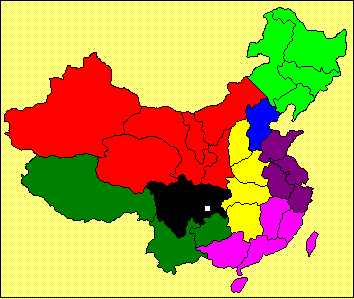
Chongqing
Municipality is shown as the small white square surrounded by the black area,
which is Sichuan
Province. |
||||||||||||||||||||||||||||||||||||||||||||||||||||||||||||||||||||||||||||||||||||||||||||||||||||||||||||||||||||
|
|
Area: 82,042 square
kilometres General information: The city
is located along the upper portion of the Yangtze River in southwest China. In March 1997, Chongqing was upgraded in
administrative status to become the fourth municipality that is responsible
directly to the central government (together with Beijing, Shanghai and Tianjin). At that time, the administrative
jurisdiction of the Chongqing government was extended to include its
neighbouring Fuling city(涪陵市), Wanxian city(萬縣市)and the Qianjiang region(黔江地區). Chongqing municipality is expected to have an
important function in the resettlement program for more than one million
people who will be affected by the Three Gorges Dam Project, which is located
downstream on the Yangtze River. About
RMB 70 billion will be needed for the redevelopment program of the region
between Chongqing and Wuhan. |
||||||||||||||||||||||||||||||||||||||||||||||||||||||||||||||||||||||||||||||||||||||||||||||||||||||||||||||||||||
|
|
|
||||||||||||||||||||||||||||||||||||||||||||||||||||||||||||||||||||||||||||||||||||||||||||||||||||||||||||||||||||
|
|
Notes:
*in real terms |
||||||||||||||||||||||||||||||||||||||||||||||||||||||||||||||||||||||||||||||||||||||||||||||||||||||||||||||||||||
|
|
|
Railways - Chongqing is a
major transportation hub in southwest China.
Three major railways, referred to as the Chengyu Lines(成渝線), are: Chengdu-Chongqing 成都-重慶), Chuanqian Lines(川黔線: Chengdu-Guiyang 成都-貴陽)and Xiangyu Lines(襄渝線: Xiangfang-Chongqing 襄樊-重慶). The municipality also plans to construct a
railway running along the Yangtze River to Shanghai within the
next 5 years. This new railway will
connect Chongqing with cities in Sichuan, Hubei, Jiangxi, Anhui, and Jiangsu provinces. An urban rail system is also under construction
in Chongqing. Roadways - One of the
major roadways is the Chengdu-Chongqing Expressway (成渝高速公路)which connects Chongqing with the national
highway network. Chongqing Lijiatuo
Yangtze Bridge(重慶李家沱長江大橋), Fengjiang Yangtze Bridge(豐江長江大橋)and a 10 km ring-road encircling Chongqing have
eased traffic bottlenecks within the city.
Other major roadways include Yuchang Expressway(渝長高速公路), linking Chongqing and Changshou(長壽), and an 53.5 km-long expressway from Changshou
to Fuling(長涪高速公路), and the Yuqian Expressway(渝黔高速公路)from Chongqing to Guiyang(貴陽). Two key projects in the tenth Five-Year Plan are
the Chongqing- Beihai Expressway and Chongqing- Zhanjiang Expressway. These two roadways are key components of
the Southwest Sea Passage, which is expected to complete before 2005. Air Transport - The Chongqing
Jiangbei International Airport(江北機場)was recently expanded to allow more flights. The
first direct air route between Chongqing and Seoul, capital of the Republic
of Korea, was opened in June 2000.
Currently, Chongqing has direct air routes to about 50 domestic cities
and countries including Hong Kong, Macao, Bangkok, Munich, Nagoya. Telecommunications -Chongqing has
direct-dial telephone and telegram links with most major overseas countries
and regions. There were over 1.7
million installed telephone lines at the end of June 2000, linking the city
with other domestic and overseas cities.
The telephone penetration rate reached 7.8 per cent in 2000, while the
number of mobile telephones subscribers reached 540,000. Gas Supply - Construction of
a new gas pipeline started in 2000, which will link the provinces of Sichuan and Hubei. Main part of the pipeline starts at Zhongxian
County in Chongqing and ends in Wuhan. The project is expected to complete by
early 2003. Oil Supply - Construction of Lanzhou-Chengdu-Chongqing oil pipeline is almost
completed. It would pass through 30
counties and cities in Gansu
and Shaanxi
provinces with Chongqing. It will have
an annual oil delivering capacity of more than 5 million metric tons. |
|||||||||||||||||||||||||||||||||||||||||||||||||||||||||||||||||||||||||||||||||||||||||||||||||||||||||||||||||||
|
|
|
||||||||||||||||||||||||||||||||||||||||||||||||||||||||||||||||||||||||||||||||||||||||||||||||||||||||||||||||||||
|
|
Chongqing is one of the four major producers of
motor vehicles and is one of the main military production bases of
China. Motor car production grew
strongly by nearly 40 per cent to 219,000 in 1999. Leading car makers include Changan
Automotive Corp and China Jialing Industrial Corporation Group (中國嘉陵工業集團)-- a joint venture with the Honda Corporation in
Japan. Motor bikes are produced by Jialing Motorcycle
Company, Lifan Hongda Enterprise (力帆轟達企業), and Chongqing Longqin Industrial Group(重慶隆欽工業集團). The municipality is also one of the 9 largest
iron and steel centres in China and one of the three major aluminium
producers. It produces more than 120
kinds of steel products and 13,000 kinds of specifications of aluminium
goods. It is also one of the most
important chemical and pharmaceutical production bases in China. Although motor cars, metallurgical products and
chemicals will continue to be the pillar industries of the municipality,
other major industries include textiles, machinery, electronics, building
materials and food processing. Chongqing's
exports doubled from US$530 million to US$1.1 billion in 2000. This increase is attributed largely to
Chongqing’s rapidly expanding motor bike industry. Other major exported goods included
clothing and textiles, chemicals and pharmaceuticals, foodstuffs, machinery,
hand tools and other light products. Hong Kong was the largest export market, accounting for 31 per cent of
the total. Other export markets were
Japan, the US, Germany, Republic of Korea and the Netherlands. Imports remained basically unchanged in 2000. Imports of motor vehicle parts accounted
for 34 per cent of the total, while other major categories were electronic
equipment, chemical materials, steel and iron, and light industrial
products. Major import sources were Japan,
Hong Kong, Germany, the US and Australia. |
||||||||||||||||||||||||||||||||||||||||||||||||||||||||||||||||||||||||||||||||||||||||||||||||||||||||||||||||||||
|
|
The Chongqing Economic & Technological
Development Zone (重慶經濟技術開發區) This was established in 1990 and covers an area
of 9.6 square kilometres. By the end
of 1999, more than 260 foreign-invested projects were approved with total
investment of US$1.3 billion, mainly from Japan, Hong Kong, the USA, and
Taiwan. Most foreign-invested projects
were involved in motor cars, motor bikes and other high-tech manufacturing
industries The Chongqing
New and High Technological Development Zone (重慶高新技術開發區) The zone, covering an area of 30 square
kilometres, was developed to attract both overseas and domestic investment in
high-tech industries, such as photoelectric, microelectronics, automation
instruments and computer software. In
1999, the GDP of the Development Zone amounted to RMB 8.5 billion. The average annual growth of GDP in the
Zone since its establishment in 1991 had been 77.48 per cent. |
||||||||||||||||||||||||||||||||||||||||||||||||||||||||||||||||||||||||||||||||||||||||||||||||||||||||||||||||||||
|
|
Jiafangbei Commercial District (解放碑) locating in the Yuzhong District, is Chongqing's
traditional commercial centre. Most
major state-owned and foreign-owned department stores are situated in this
district. Major department stores and
shopping centers include Chongqing Department Store(重慶百貨大樓), Chongqing New Century Department Store(重慶新世紀百貨), the Metropolis Plaza(大都會廣場), Chongqing Qunying Shopping Center(群鷹百貨), Chongqing Pacific Department Store(重慶太平洋百貨), Chongqing Fu'an Department Store(重慶富安百貨), Chongqing Wanyou Parkson Shopping Arcade(重慶萬友白盛百貨), Chongqing Yangguang Department Store(重慶陽光百貨), Jiafangbei Central Shopping Center(解放碑中心購物廣場)and Jialefu Direct-sale Department Store(家樂福直銷商場). |
||||||||||||||||||||||||||||||||||||||||||||||||||||||||||||||||||||||||||||||||||||||||||||||||||||||||||||||||||||
|
|
Hong Kong Trade Development Council
(http://www.hktdc.com). |
||||||||||||||||||||||||||||||||||||||||||||||||||||||||||||||||||||||||||||||||||||||||||||||||||||||||||||||||||||
|
|
James
Zhan, Manager: james.zhan@austrade.gov.au Stephanie
Zhou, Business Development Manager: stephanie.zhou@austrade.gov.au Rm408
Holiday Inn, 31 Zongfu St. Tel:
(86 28) 6786 128 The
Chamber is in the process of maintaining regular contact with organisations
in the Chongqing. Please contact us if
you require additional information. |
||||||||||||||||||||||||||||||||||||||||||||||||||||||||||||||||||||||||||||||||||||||||||||||||||||||||||||||||||||